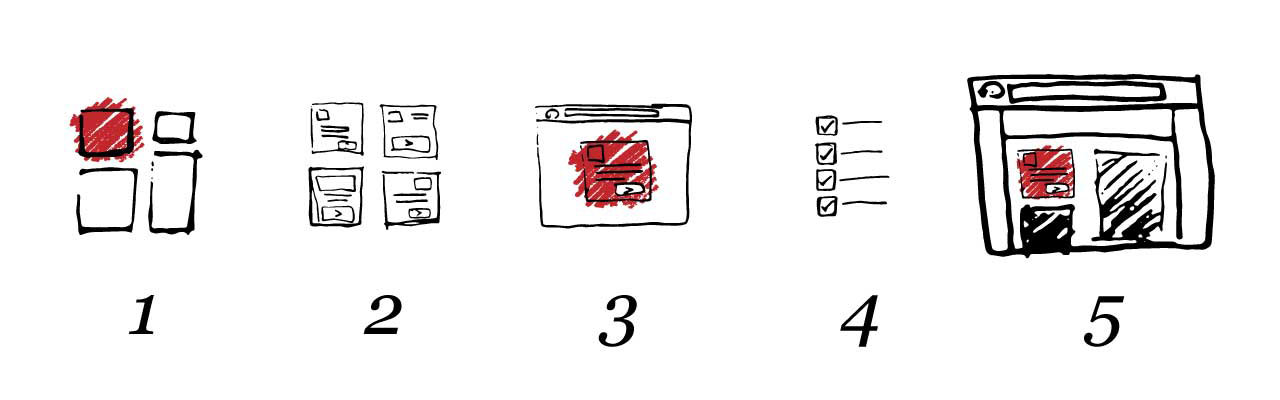
Planning out a large application can be a very daunting prospect, especially when it comes to considering all the ways in which it will be used. At Seccl, we break down our user interfaces and applications so that we are not just considering the pages.
We look at the ways people will journey through our applications; we then break it down to the ways someone might interact with a part of each journey; finally we look further into the individual pieces that you see on the screen.
We have seen the huge benefits of pure functions for creating high quality and testable JavaScript. I’ve been applying the same understanding to UI components for a while now and am seeing these same benefits. It’s useful to take a look at what makes a “pure component” and how we can change the way we build websites to realise these benefits.
A “pure function” is a function that satisfies two conditions:
There is a lot of talk about components in the UI space. I’m currently working with Econsultancy on building a library of components for use in their website. Just to be clear, I’m not talking about the WebComponents spec here.
A bit of history
I first started experimenting with the concept of components when I built the Lloyd’s of London website back in 2009. I designed the concept of modules, components and layouts which could specify nested elements and could have slight variations which I called types.
 Dave Taylor - Software Engineer